
High-Risk Buildings: A New Era of Safety and Accountability
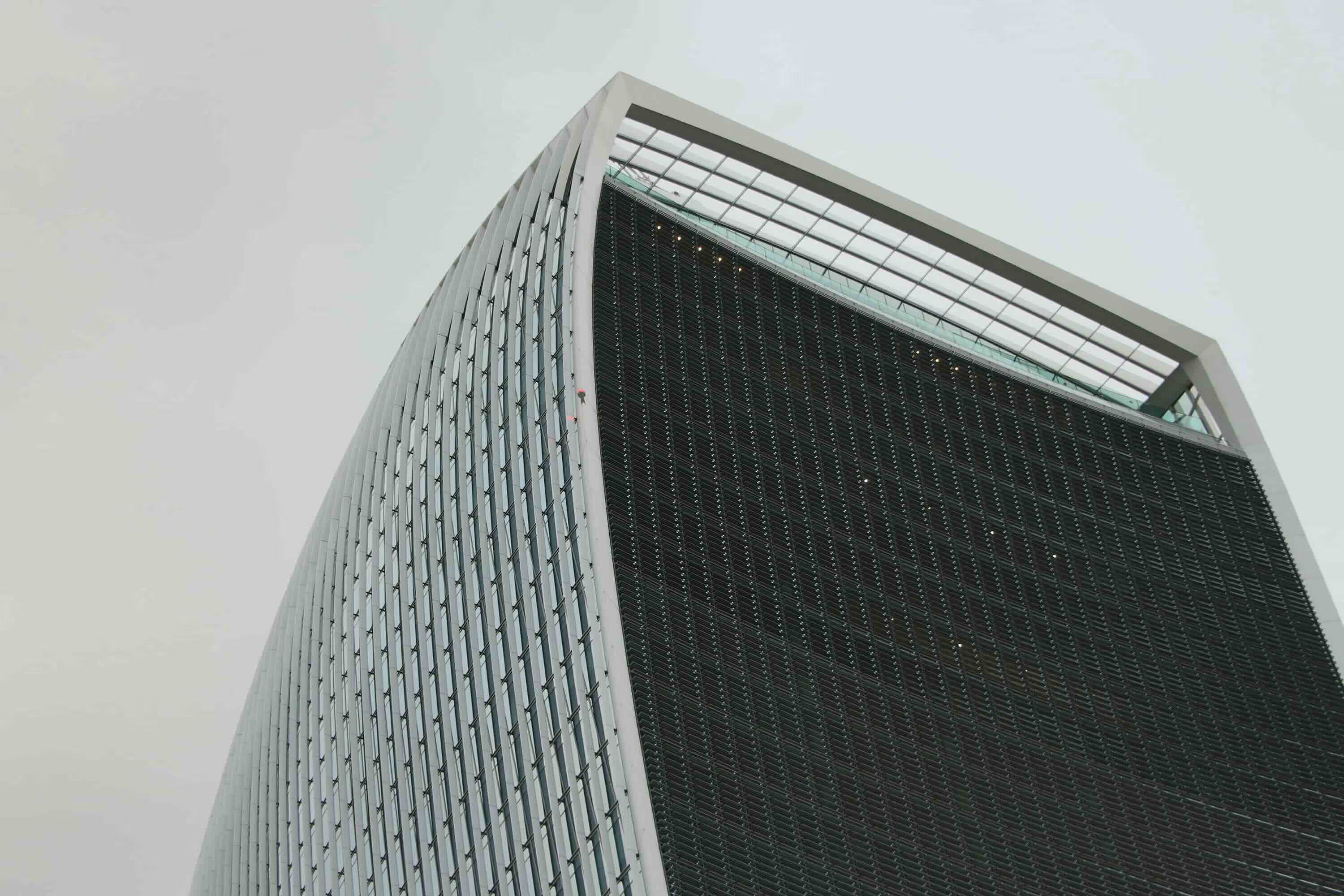
The Grenfell Tower tragedy in 2017 served as a stark reminder of the importance of stringent fire safety measures in high-risk buildings. In response, the UK introduced the Building Safety Act, a landmark piece of legislation designed to enhance safety standards, ensure greater accountability, and protect residents in high-risk and high-rise structures.
Defining High-Risk Buildings
The Act primarily focuses on high-rise residential buildings over 18 metres in height, though its scope also extends to other buildings presenting significant safety risks. It encompasses not only new developments but also refurbishment projects where applicable. This comprehensive approach ensures that both newly constructed and existing structures meet enhanced safety benchmarks.
Key Provisions of the Building Safety Act
1. Stronger Accountability for Developers and Owners
Developers and building owners are now required to comply with more rigorous regulations, risk assessments, and reporting standards. These measures aim to ensure that safety remains a priority throughout the lifecycle of a building—from initial design to long-term management.
2. Enhanced Safety Standards for Residents
The Act enforces stronger safety protocols, offering residents greater transparency and peace of mind. Regular updates and safety reports are mandated, providing assurance that risks are being proactively managed.
3. A Collaborative Approach for Industry Professionals
Architects, designers, construction teams, and fire safety specialists are key players in meeting the Act’s requirements. These professionals must familiarise themselves with the legislation to ensure compliance at every stage of a project, from design to occupation.
The Gateway Approval Process
A cornerstone of the Act is the three-gateway process, overseen by the Building Safety Regulator (BSR), which ensures that safety considerations are embedded at every stage of a building’s lifecycle:
• Gateway 1: Planning
At the planning stage, developers must submit a detailed fire and structural safety report to demonstrate how the design complies with the Act’s strict standards. The BSR acts as a consultant if planning permission is required.
• Gateway 2: Pre-Construction
Replacing the traditional “deposit of plans” stage, this gateway requires BSR approval before construction can begin. The plans must meet building regulations, and phased submissions are possible for complex projects at the discretion of the Health & Safety Executive.
• Gateway 3: Completion
Before occupation, the completed building undergoes a final review to ensure that it meets the required safety criteria. This final step is crucial in confirming that residents can safely inhabit the property.
Impact on the Industry
The Act’s focus on fire safety, structural integrity, and regulatory compliance marks a significant shift in the construction and real estate sectors. While the process may be more rigorous, it fosters a culture of safety, accountability, and transparency, benefiting all stakeholders involved.
Looking Ahead
For luxury property developers and stakeholders involved in high-risk buildings, the Building Safety Act underscores the importance of integrating safety from the outset. By embracing this proactive approach, the industry not only complies with the law but also reinforces its commitment to creating safe, resilient, and high-quality living environments.
With stricter regulations and a clear framework, the Act is poised to reshape the future of high-risk building design and management, ensuring that the tragedies of the past are not repeated. For residents, this translates to safer homes and greater peace of mind, while developers and professionals take pride in delivering projects that set a new benchmark in safety and accountability.